By: Victor Nthusi, Consulting Research Fellow | Health Effects Institute
As research and policy initiatives on the African continent continue to inform our understanding of air pollution and its health effects in the region, stronger coordination mechanisms for exchange of data and knowledge are essential for collective learning. The Africa Clean Air Forum, an annual convening for the air quality community in Africa, provides a platform for policymakers, air quality experts, industry leaders, academics, media and civil society organizations to foster collaborations and cross-border partnerships to address air pollution across Africa.
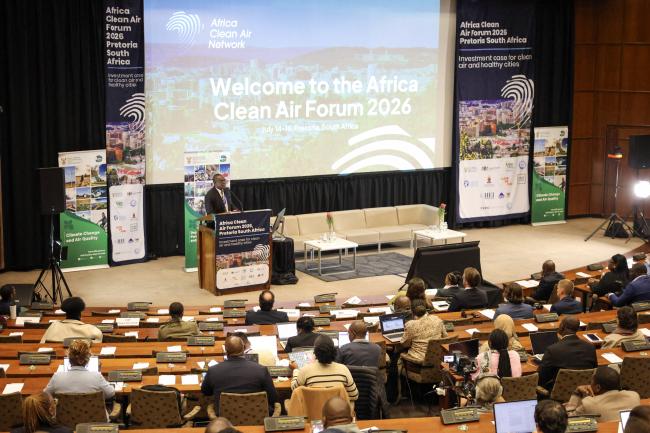
In July, HEI co-organized the fourth Clean Air Forum in Pretoria, South Africa, under the leadership of Africa Clean Air Network. The theme for this year’s Forum was “investment case for clean air and healthy cities”. Throughout the forum, key messages emerged, shaping a collective call to action for investment in clean air and healthy cities across Africa.
Diversity is our strength
The Forum opened with a plenary session on ‘Strengthening Regional Cooperation on Air Quality in Africa’. Regional integration initiatives in Africa have a long history, dating back to the formation of Regional Economic Commissions (RECs) in 1919. These efforts are almost always geared towards economic cooperation among countries and anchored on increasing ease of trade, building shared infrastructure, and jointly managing health crises and security threats. As the continent urbanizes and industries thrive, air pollution presents significant development challenges, impacting economies through reduced labor productivity and premature mortality. In Africa, air pollution is the third leading risk factor for deaths, accounting for 1.2 million deaths in 2023. Poor air quality causes more deaths annually than some of the more well-known risk factors like unsafe water and sanitation.
While the continent experiences diverse pollution sources from Sahara dust in the north to landscape fires in the central and south regions, the air we breathe remains a global common, affecting livelihoods across the board and clouding the future of our children. In addition, pollution levels are on the rise from human activities including energy generation, waste burning, transportation, industrial processes, agricultural activities, and cooking and heating in homes.
At a global level, Multilateral Environmental Agreements (MEAs) and UN Resolutions provide a foundation for regional collaboration on air pollution. However, pollution prevention efforts are often limited in duration and regionally isolated, with smaller projects seldom scalable to the national and continental level. There was consensus amongst forum delegates that coordinated regional action can be achieved when pan-African collaborations are prioritized.
Several strong examples of regional action were also shared, and there are useful lessons. For instance, the United Nations Environment Programme has worked with the RECs to promote clean fuels and vehicles through the harmonization of low-sulfur fuel regulations and vehicle emission standards for the past 15 years. Similarly, the Climate and Clean Air Coalition, in collaboration with the African Union Commission, launched the Africa Clean Air Programme in 2025, a platform for regional cooperation in advancing Africa’s response to the intertwined challenges of air pollution and climate change. Together, these two initiatives exemplify the role of regional cooperation in promoting an equitable response to the threat of air pollution.
Money flows where it can count!
Without robust pollution data as the foundation of air quality management programs across Africa, quantifying the benefits of air pollution interventions on public health and the environment remains challenging. The plenary session on day 2 of the forum emphasized the need to include cost-benefit analysis in large projects where the benefits of air pollution control programs often outweigh the cost of implementation.
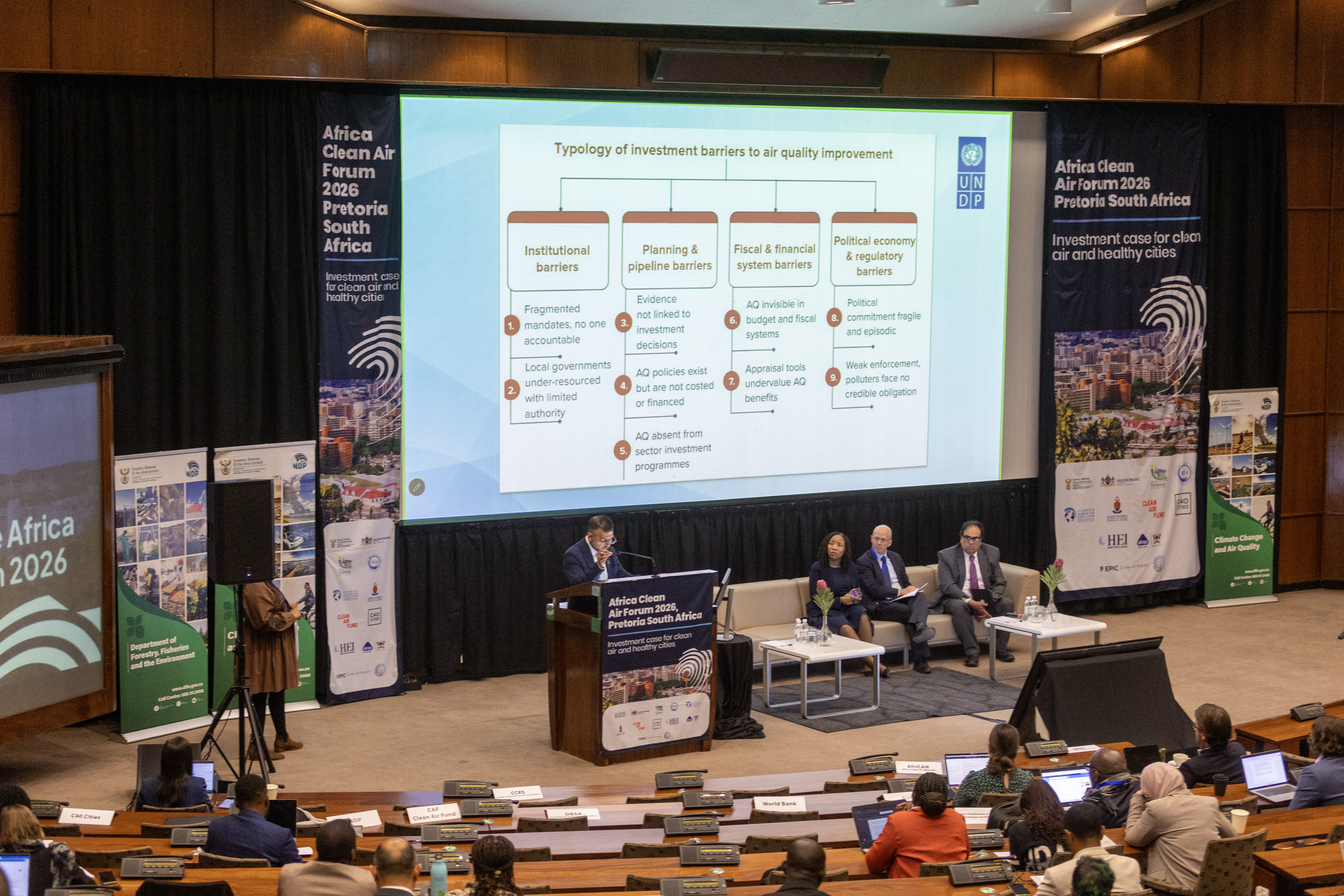
Plenary session on Mobilizing Development Finance for Clean Air Actions
The United Nations Development Programme identifies air pollution as a development priority in Ghana and Ethiopia, demonstrating why cleaner air is essential for strengthening economic resilience and advancing sustainable development. Despite the recognition of air pollution as a development challenge, less than 1% of global philanthropic funding went to clean air projects in Africa between 2019 and 2023. The challenge of mobilizing financing for clean air actions lies not only in making the invisible visible, but in making clean air solutions investment-ready.
Unfortunately, growing perceptions that investments in Africa are of higher risk compared to other continents mean that cost-benefit analysis alone will not unlock adequate financing. The World Bank recognizes de-risking as a key element in making air pollution projects “bankable”. For instance, an e-bus project in Cairo was able to cut emissions while creating jobs and attracting additional private financing. Money flows where it can count benefits while mitigating risks.
Transforming the norms is key to sustainable financing
The ‘Regional Case Studies on Air Quality Action’ session highlighted successes in expansion of air quality monitoring networks across the continent but acknowledged that strong governance frameworks are essential to move from data to implementation. Examples of national, provincial and city case studies presented include:
- Togo’s establishment of an air quality monitoring network that has provided crucial data for the development of the country's first national air quality standards.
- Use of monitoring and modelling tools to inform regulatory enforcement in many of the high-priority areas in the province of Gauteng, South Africa.
- Nairobi’s expansion of monitoring infrastructure through a combination of reference-grade instruments and low-cost sensors.
- Kampala’s data driven and inclusive approach in implementing its Clean Air Action Plan.
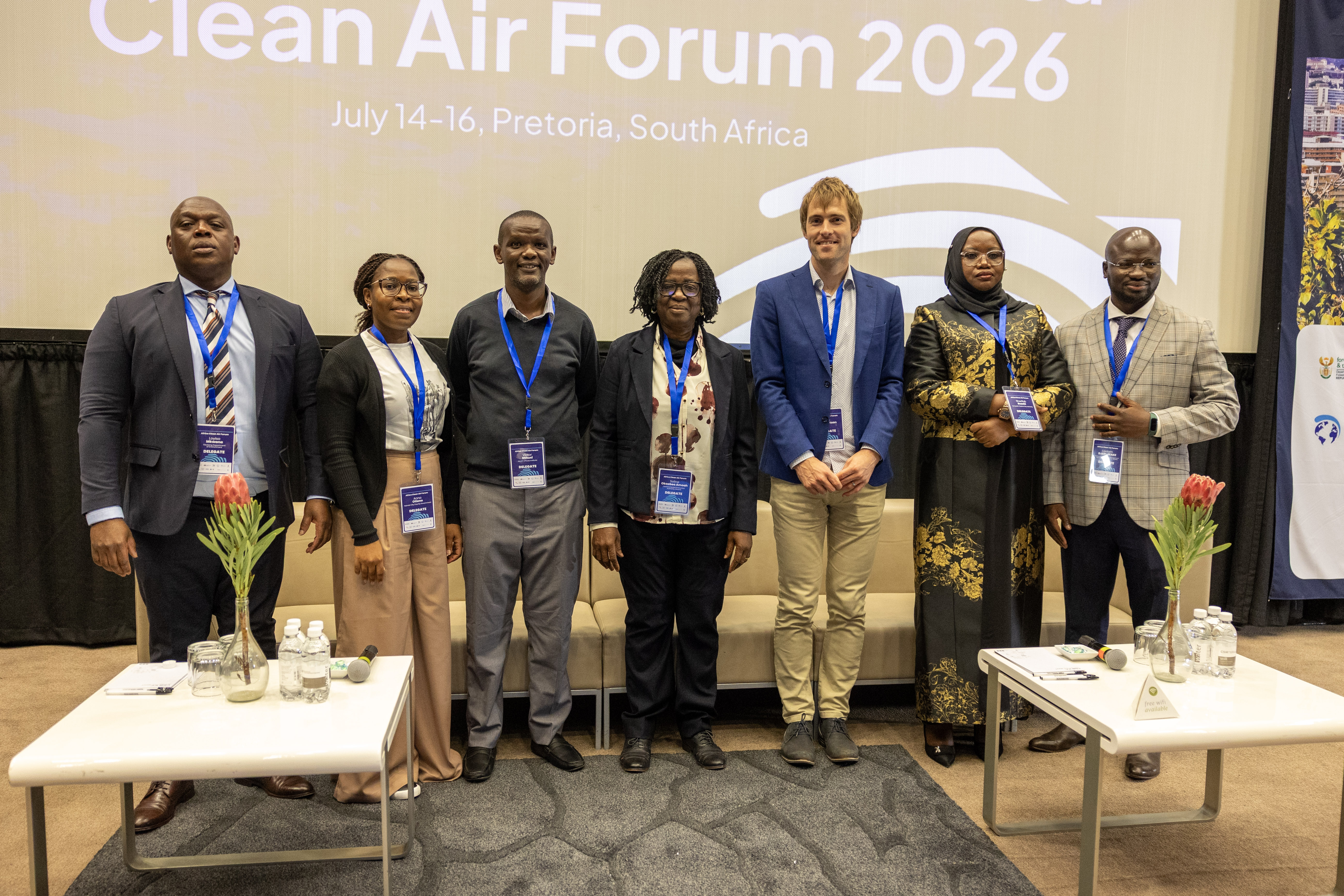
Victor Nthusi co-chaired a Session on Regional Case Studies of Air Quality Action
The Forum closed with a plenary session on ‘Future Momentum for Air Quality Action Across Africa’ that offered a powerful reminder that solutions should be designed “with” and not “for” communities, while investing in the largely youthful population not as tomorrows’ leaders, but as today’s partners. The several successful case studies, the vibrant and interdisciplinary community, and the inspiring stories of impact from seven EPIC Air Quality Fund projects awarded during the Forum challenged the narrative of Africa as a beneficiary of innovation and showcased the continent as a creator of solutions.
In overcoming financing barriers for clean air action, practitioners will need to transform norms such as open burning of waste, the use of biomass for cooking and heating and the use of old vehicles beyond their end-of-life, to drive perceptions towards sustainable development and create clearer investment pathways.
Does clean air have a price tag? Maybe not. But the benefits lie in the hospital visits avoided, the cleaner technologies employed in cooking and heating African homes, the hours of traffic congestion saved in multiple African cities, the efforts made in upscaling local innovations that showcase community-led actions, and ultimately, the improvements in the quality of life of Africans.
Access the forum materials here.