
Population-weighted average seasonal 8-hour maximum ozone concentrations in 2020.

Numbers of deaths attributable to ozone in 2023.


About Ozone

Ozone is a secondary pollutant formed by chemical reactions between nitrogen oxides and volatile organic compounds in the presence of sunlight. The precursors to ozone are produced primarily by human activities, including transportation, industrial processes and the burning of fossil fuels. Some volatile organic compounds also come from natural sources.

The ozone that forms near ground level (also known as tropospheric ozone) is a harmful pollutant. This is different from the protective “ozone layer” that forms in the upper atmosphere as a result of natural processes.

Long-term exposure to ground-level ozone is linked with chronic obstructive pulmonary disease (COPD), a progressive and debilitating disease that makes it harder to breathe.


Why it Matters

Ozone has serious health impacts, accounting for 470,000 deaths globally. Because COPD typically takes many years to develop, older adults — and countries with aging populations — suffer the highest burden. In the last two decade, the disease burden of ozone has increased by more than 50%, from 261,000 deaths in 2000 to 470,000 deaths in 2023.

Ozone pollution is also connected with climate change. Warmer air causes ozone to form faster. In some instances, this means that extreme heat, especially in urban environments, can result in more poor air quality episodes. Ozone is also a greenhouse gas and contributes to warmer temperatures on a global scale. 
 

Image
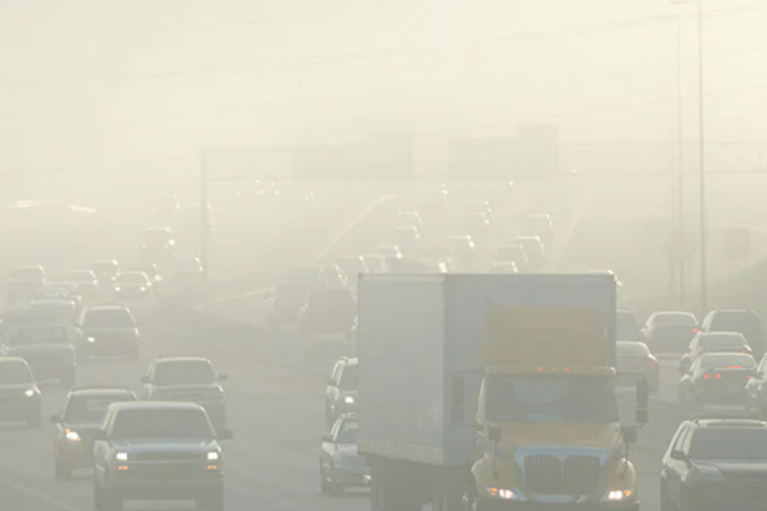
city smog


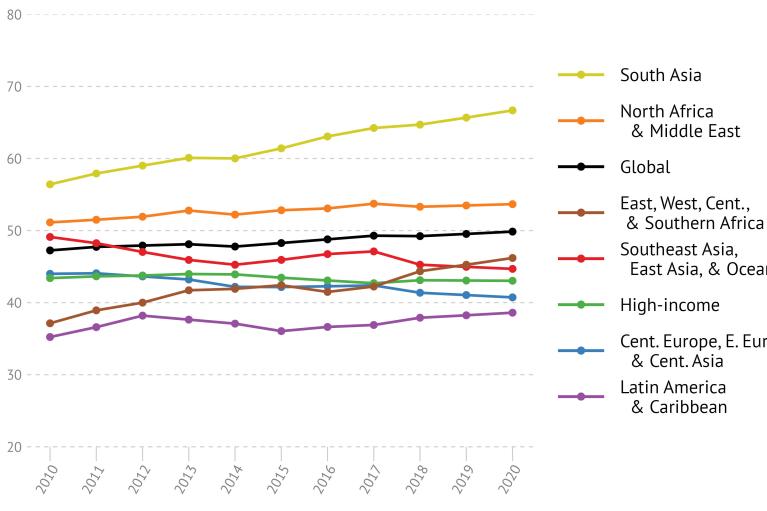
Trends in ozone exposure levels (left) from 2010 to 2020 and deaths attributable to ozone (right) from 2010-2023. Countries in South Asia saw the steepest increase in both exposures and deaths.

Trends in ozone exposure levels (left) from 2010 to 2020 and deaths attributable to ozone (right) from 2010-2023. Countries in South Asia saw the steepest increase in both exposures and deaths.


Ozone Trends

Globally, studies suggest that ozone levels today are 30% –70% higher than they were 100 years ago. This is because of two trends: emissions of ozone precursors have risen, and at the same time, rising global temperatures have sped up the chemical reactions that form ozone.

Countries with the highest average ozone exposures are in the Middle East (Qatar and Bahrain) and South Asia (Nepal, India and Bangladesh). In 2023, annual average ozone concentrations met the least stringent interim target (IT-1, 100 µg/m3) in 164 countries, compared to 179 countries a decade ago. Unlike some other pollutants, there is no consistent relationship between ozone exposures and a country’s level of sociodemographic development, in part because ozone is often transported far from its sources, affecting multiple countries. Regions including South Asia, North Africa and Middle East, and East, West and South Africa have increasingly high exposure to ozone. 

The overall number of ozone-related COPD deaths increased by nearly 35% over the past decade. Regional trends vary widely, reflecting regional differences in ozone exposures and COPD mortality rates, as well as underlying health and population characteristics. Together, India and China account for 70% of the total global mortality burden due to their combination of high ozone exposures, high COPD death rates, and large populations. Interestingly, the United States has one of the highest ozone-attributable  global disease burdens among high-income countries.

Change in ozone exposure levels from 2010-2020 (left) and deaths attributable to ozone from 2010-2023 (right) in the 20 most populous countries. 

Change in ozone exposure levels from 2010-2020 (left) and deaths attributable to ozone from 2010-2023 (right) in the 20 most populous countries.