By: Jennie Lee | Intern, Global Initiatives, HEI
In the last few months, intense, frequent wildfires have ignited across the globe, bringing unwelcome air pollution and health burdens to nearby populations and even those thousands of kilometers away. When wildfire smoke travels away from its source, it can affect populations and communities that may be less prepared to mitigate its health impacts. As wildfire seasons grow increasingly severe and frequent, learning about regional wildfire events, health effects of wildfire smoke, and protection measures is imperative.
Wildfires ignited by both nature and humans produce toxic emissions
Weather conditions play a foundational role in jumpstarting wildfires and moving smoke plumes across long distances. Wildfires are a natural part of many ecosystems, often occurring through lightning strikes, and summer weather brings drier conditions and vegetation. Fires can bring beneficial effects to these ecosystems by removing flammable material in forest areas and reducing the risk of larger, uncontrollable fires in the future. However, this natural phenomenon is changing. An estimated 80–95% of global wildfires now originate from accidental or deliberate human causes (e.g., unattended campfires, equipment failure).
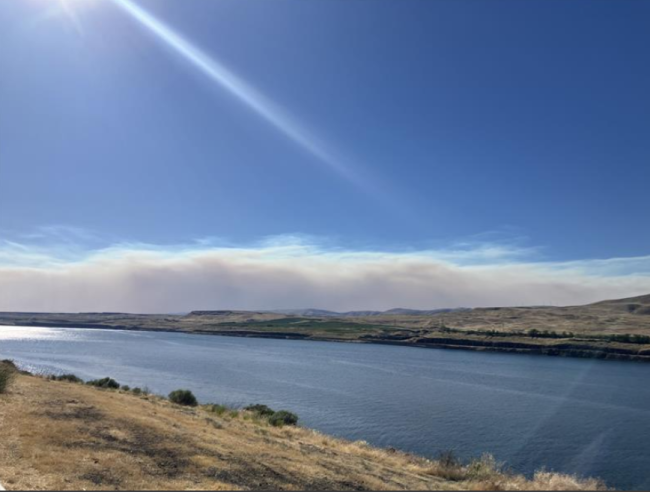
Once ignited, wildfire flames can propel smoke particles to higher atmospheric altitudes. In the upper layers, high-pressure jet streams can then transport smoke plumes to densely populated areas up to thousands of miles away from the source point.
Wildfire smoke contains a mix of toxic gases and fine particulate matter (PM2.5), particles with a diameter equal to or less than 2.5 micrometers. Roughly 90% of the total particle mass released from wildfire burning is composed of PM2.5. Because of their small size, these particles can penetrate deep areas of the lungs when inhaled. Some wildfire events release PM2.5 concentrations that exceed the WHO air quality guideline levels by 10 to 20 times. Carbon dioxide emissions from wildfires can reverse progress on anthropogenic emissions control efforts as well.
Regional wildfires spread smoke past borders
Southeast Asia is currently experiencing persistent haze events from seasonal peat and agricultural fires. The smoke from these fires largely originates in Indonesia and affects air quality in Thailand, Singapore, and neighboring countries. This year, El Niño has played a large role in Indonesia’s long droughts, contributing to an unusual spike to over 160,000 peatland hotspots.
As of mid-August, the EU recorded 580,000 hectares burned and 1,600 fires since the start of the year, which is steadily catching up to last year’s record wildfire damage of 1,028,701 hectares. The most impacted regions this year are Gironde, France, and parts of Spain, which have lost approximately 42,000 hectares of pine forest and 200,000 hectares, respectively.
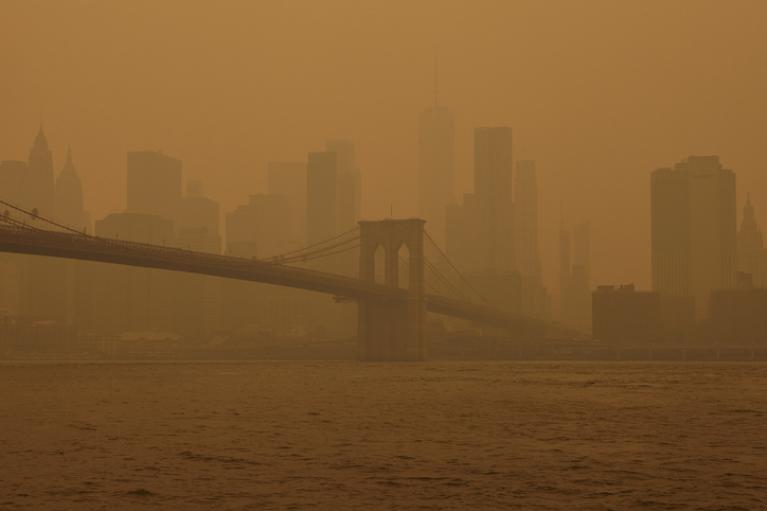
In July 2026, smoke from Canadian wildfires in northwestern Ontario and southern British Columbia darkened the skies of cities across Canada and the United States and resulted in poor air quality. New York, Toronto, and Washington, D.C., were among the cities that experienced the worst air pollution in the world, even though they were located far from the actual wildfires. Canada has experienced more than 4,000 wildfires that have burned over 3.7 million hectares, with dozens of fire sources still out of control.
Smoke Aerosol Optical Depth and cumulative total estimated wildfire carbon emissions over the North Atlantic between 30 June and 31 July 2026. Credit: CAMS/ECMWF.
In South America, over 4 million acres of the Brazilian Amazon have been burnt between January to August 2026, higher than the previous year’s record. Biomass burning in the Amazon basin for land-clearing use releases massive amounts of carbon dioxide, and in turn, contributes to a feedback loop and exacerbates climate change and the risk of wildfires.
These events raised global public awareness of the transboundary movement of wildfire smoke and the associated health effects.
Human health burden from wildfire smoke
Pollutants from wildfire smoke induce both immediate and lasting health effects on people, raising concerns for those who are more vulnerable and susceptible to these health burdens.
| Short-Term Health Effects | Long-Term Health Effects |
|---|---|
| Mild symptoms (e.g., headaches, eye irritation) | Lung cancer |
| Severe effects (e.g., asthma attacks, cardiovascular strain, acute mortality) | Higher risk of premature death |
Sources: World Health Organization Wildfires Fact Sheet & Health Canada Human Health Effects of Wildfire Smoke
Children, older adults, pregnant women, and those with existing heart or lung conditions face a disproportionate risk from exposure to wildfire smoke, particularly when combined with socioeconomic factors like limited healthcare access or employment settings outdoors (e.g., construction or agriculture sectors).
Existing protective measures
Even though wildfire occurrence and health risks are projected to increase in this century, coordinated and strategic efforts across multiple levels can protect against the health burden of wildfire smoke:
- On an individual level, exposure can be reduced by limiting time spent outdoors during wildfire events, checking real-time air quality index (AQI) values, improving indoor air quality, and following safety guidelines from relevant local and national authorities.
- On a community level, protective measures must extend to populations without access to individual mitigation tools. This includes establishing designated temporary clean-air shelters by repurposing public facilities (e.g., shopping centers) during severe air quality events and implementing clean-air standards in schools.
- On a national level, research into the chemical composition of wildfire smoke and its associated health effects should be supported alongside development of longer-range predictive modeling and early warning systems. Expanded monitor coverage, routine prescribed burns, and cross-regional emergency planning would help as well.
Resources with guidance on actions to protect against wildfire smoke & tracking on fire events:
- Global
- Global Fire Monitoring (Copernicus Atmosphere Monitoring Service)
- Real-Time Fire Detection and Monitoring with AI and Satellites (Satellites on Fire)
- Wildfires Factsheet (World Health Organization)
- North America
- Wildland Fires and Smoke (US Environmental Protection Agency)
- Wildfires and Indoor Air Quality (US Environmental Protection Agency)
- Fire and Smoke Map 4.5 (AirNow, US Environmental Protection Agency)
- Resources to Aid in Protecting Human Health from Wildland Fire Smoke Module (AirKnowledge, US Environmental Protection Agency)
- Canadian Wildland Fire Information System & Interactive map (Natural Resources Canada)
- Wildfire smoke and your health (Health Canada)
- Europe
- Wildfires (European Commission Civil Protection and Humanitarian Aid Operations)
- European Union Wildfire Status (European Forest Fires Information System)
- Southeast Asia
- Regional Management Resource Center–South East Asia (RMRC–SEA)
- Forest and Land Fire Monitoring System (Indonesia Directorate of Forest Fire Control)
- South America
- Public Health Situation Analysis: Wildfires in South America, February 2025 (Pan American Health Organization)
- Fire Monitor (Brazil MapBiomas)
- Current situation and fire forecast (Chile Corporación Nacional Forestal)