By: Hlina Kiros | Research Assistant, HEI
Air pollution is the leading environmental risk factor for poor health, and the health burden falls overwhelmingly on low- and low-middle income countries (LMICs). Of the estimated 7.9 million deaths attributed to air pollution in 2023, more than 90% occurred in LMICs. The wide disparities in health impacts of air pollution across regions can result from various factors such as population density, nature and magnitude of sources, geographic location, a country’s economic state, socio-economic status, ambient pollutant concentrations, and access to medical care and clean cooking fuels.
The Socio-Demographic Index (SDI), developed as part of the Global Burden of Disease Study (GBD), groups countries into five categories and assesses sociodemographic development levels based on: fertility rates for individuals under 25, educational attainment for those over 15, and per capita income (Figure 1). Although the SDI is a tool describing a nation’s development, it can be useful in assessing patterns of air pollution’s burden around the world. It groups countries by similar developmental statuses to explore potential contributors to the disease burdens and opportunities for intervention.
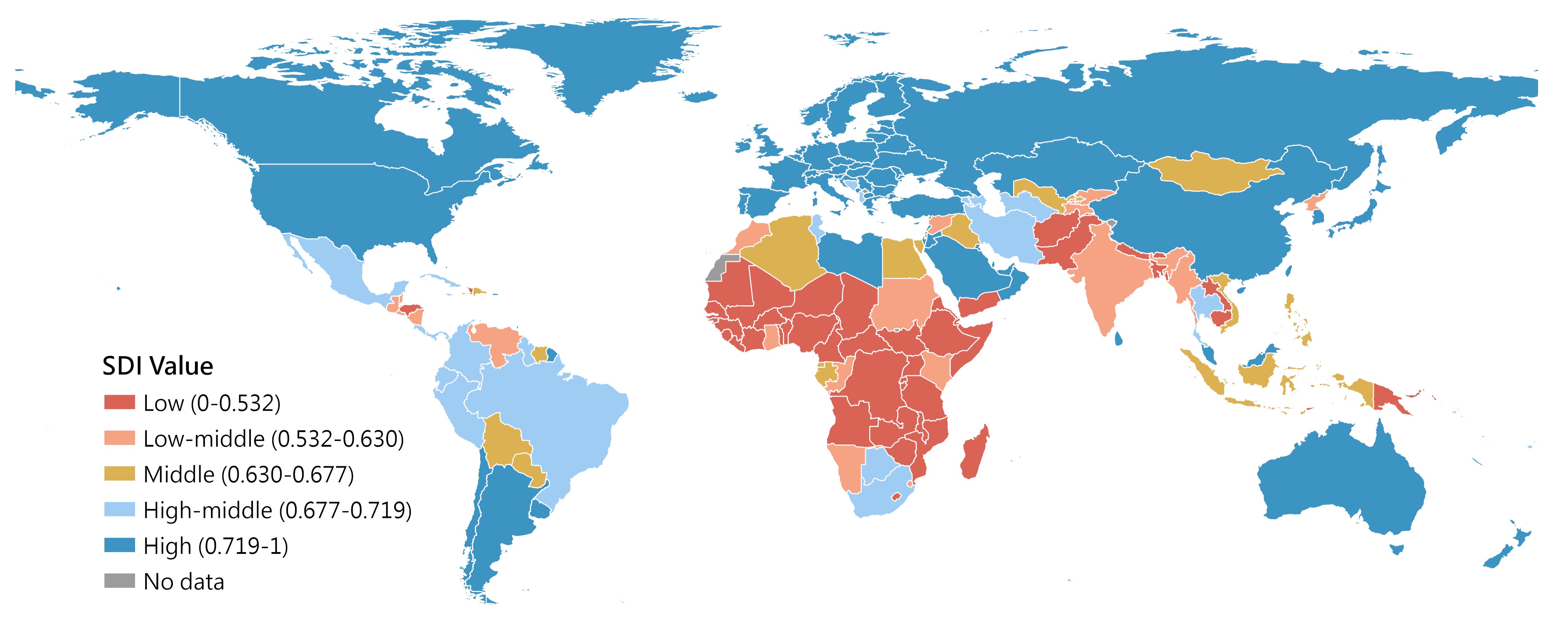
Figure 1: Classification of countries based on SDI. In 2023, 50 countries were classified as Low SDI, 25 as Low-middle SDI, 17 as Middle SDI, 23 as High-middle SDI, and 79 as High SDI.
High income does not guarantee clean air
Low SDI countries face larger disease burdens due to total air pollution exposure. This is due to factors such as higher levels of air pollution, higher prevalence of diseases, proximity to busy roads and highways, and limited access to clean cooking. Despite the larger disease burden of air pollution seen in these countries, exposure to specific pollutants, such as NO2 and PM2.5, remains high in several high SDI countries.
Countries with high SDI such as Qatar (107.8 µg/m3), Saudi Arabia (74 µg/m3), and Kuwait (62 µg/m3) not only see some of the highest PM2.5 exposures, but the exposures are 2-5 times larger than exposures in low-middle SDI countries like Kenya (20 µg/m3), India (54.1 µg/m3), and Nigeria (65.7 µg/m3). The high exposures to PM2.5 in North Africa and the Middle East are associated with industrial and agricultural activities, and the movement of dust (Figure 2a).
High and high-middle SDI countries also have significantly higher exposures to NO2 (Figure 2b). Countries including Bahrain (14.9 ppb), South Korea (13 ppb) and Qatar (11.3 ppb) experience some of the highest exposures to NO2 in the world. High vehicle ownership in high SDI countries contributes to more burning of fossil fuels and releases NO2 into the air. Comparatively, low-middle SDI countries with larger populations, such as India (6.5 ppb) see nearly half of the rates of exposure to NO2. However, it must be noted that lower income countries that primarily use older vehicles and have high traffic density are now experiencing rapid increases in NO2 exposure, especially as vehicle ownership increases.
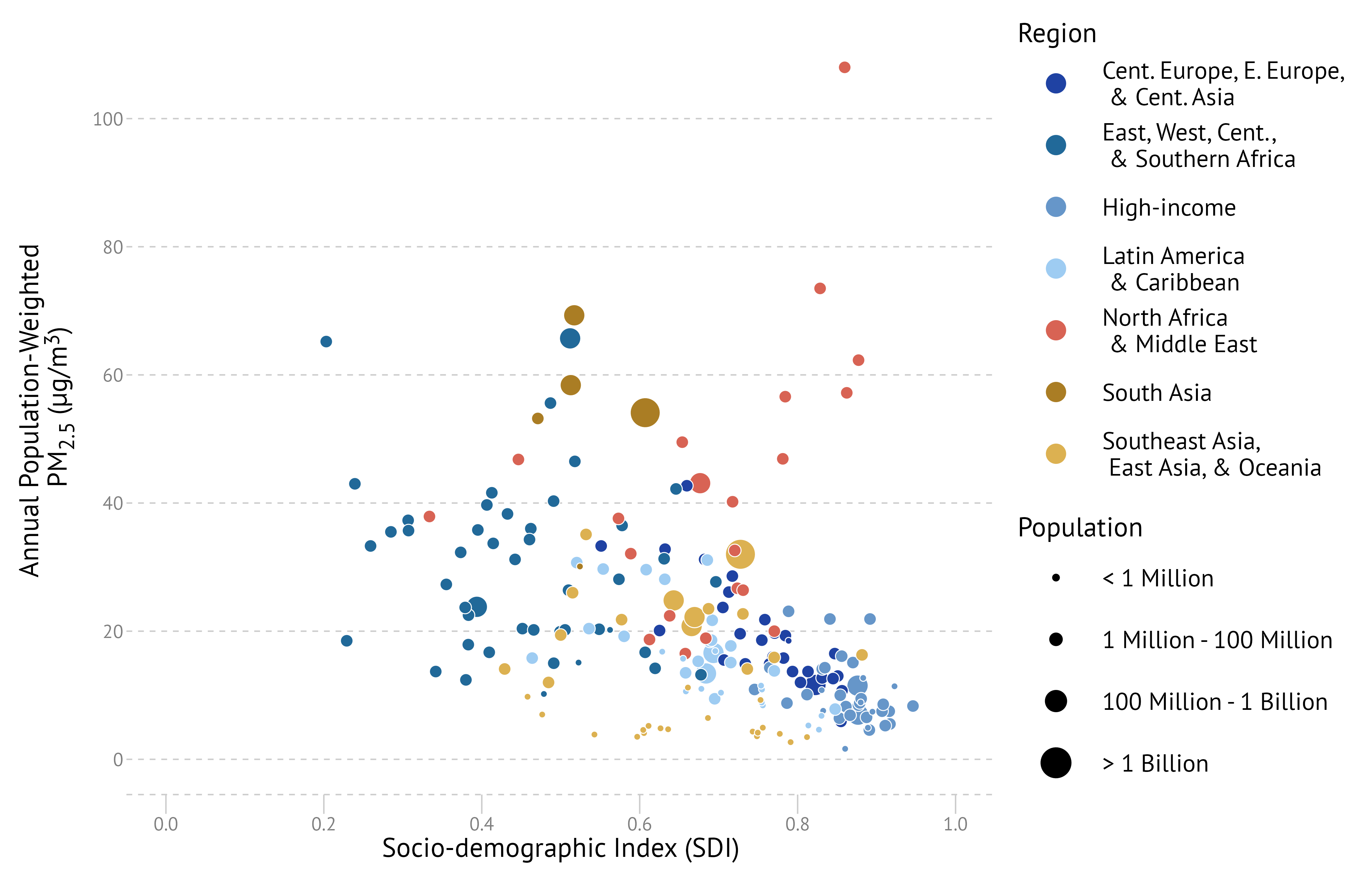
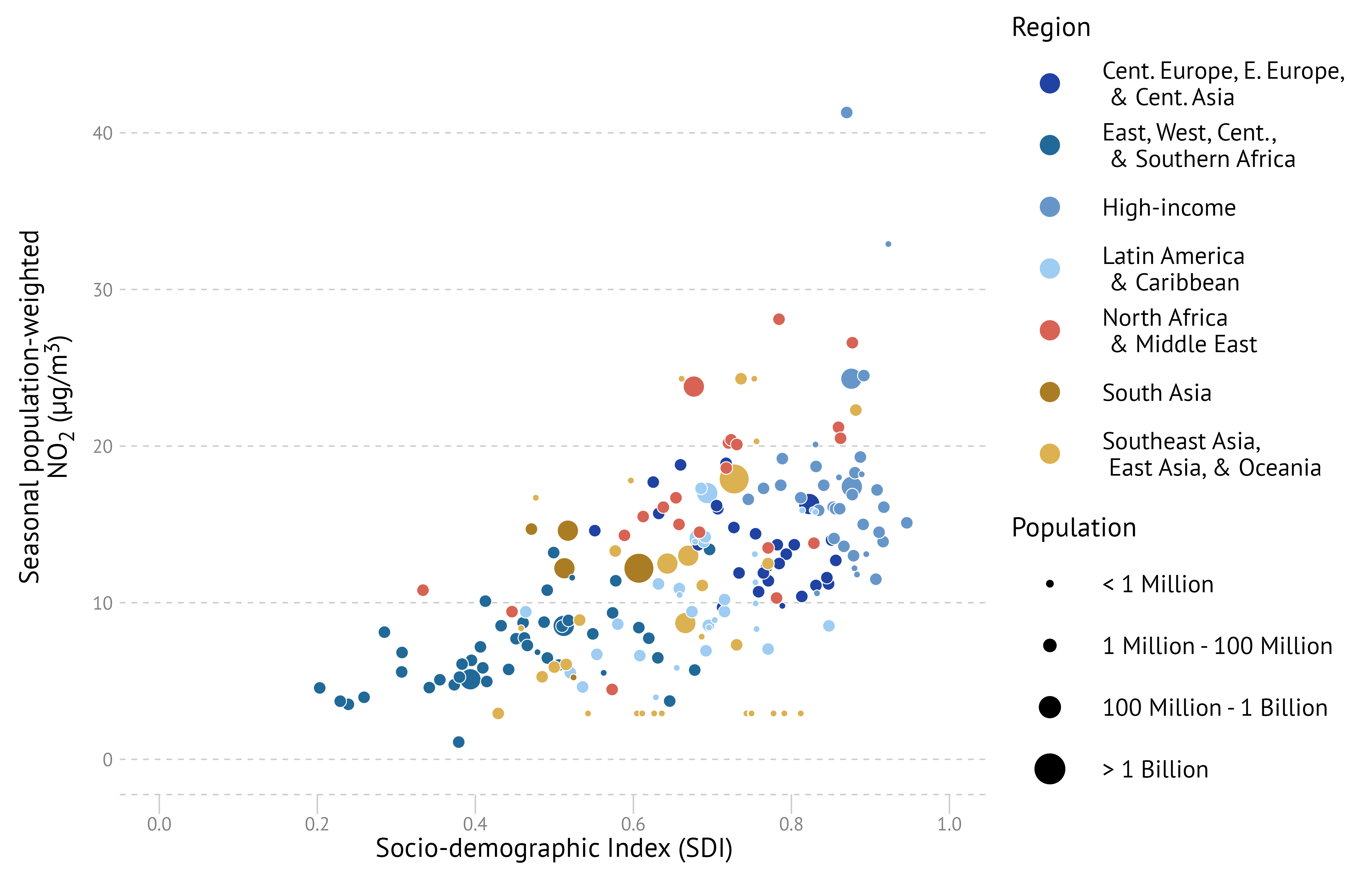
Figure 2a & 2b: Exposure to PM2.5 and NO2 by SDI, GBD region, and population in 2023.
Low SDI countries experience the highest mortality attributable to air pollution.
In 2023, low- and low-middle SDI countries experienced the highest age-standardized death rates attributable to air pollution (201 and 183 deaths per 100,000 people respectively). Broadly, these rates were nearly 2-5 times higher those seen in middle (105 deaths per 100,000 people), high-middle (95 deaths per 100,000 people), and high (42 deaths per 100,000 people) SDI countries. Low and low-middle SDI countries made up roughly 18% and 19% of global air pollution-related deaths, respectively (Figure 3). A case in point: the mortality rate in India is 14 times higher compared to the United States (186 and 13 deaths per 100,000 people, respectively). Several smaller low and low-middle SDI countries also have significantly higher age-standardized death rates, such as the Solomon Islands (421 deaths per 100,000 people), Myanmar (286 deaths per 100,000 people), Papua New Guinea (283 deaths per 100,000 people) and Haiti (283 deaths per 100,000 people).
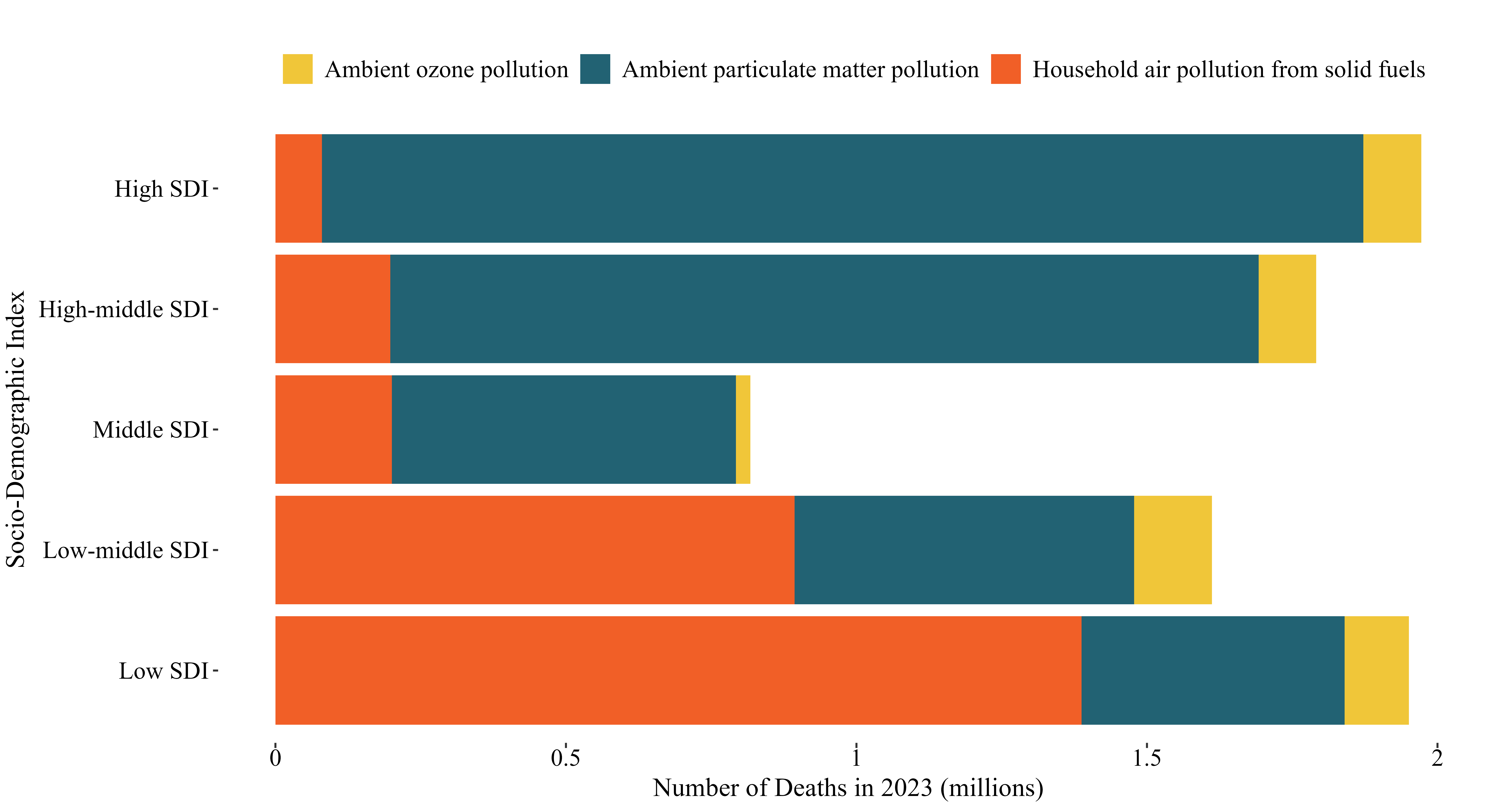
Figure 3: Number of air pollution deaths by pollutant type for each SDI group in 2023.
Low SDI countries bear the largest burden from HAP.
Low and low-middle SDI countries experience the highest number of deaths attributable to household air pollution (HAP) exposure (1.5 million and 893,000 deaths respectively) in 2023. Low SDI countries have seen a 12% increase in HAP related deaths since 2000, whereas high-middle SDI countries have seen a 79% decrease in HAP related deaths (958,000 deaths in 2000 vs 201,000 in 2023).
Since 2000, the death rate associated with HAP exposure has decreased from 197 to 145 deaths per 100,000 people in low SDI countries. Despite this decline, the total number of HAP-related deaths has increased since 2000. Rapid population growth in highly populated countries, such as India and Nigeria, portrays that although the general risk is declining, more people continue to be exposed and more deaths occur. In contrast, smaller countries, such as the Marshall Islands, may see few HAP-related deaths (26 deaths in 2023), but high death rates (134 HAP-related deaths per 100,000 people in 2023) because of the smaller population size.
Inaction in addressing NCDs impacts lower SDI countries.
The burden of noncommunicable diseases (NCDs) is continuing to rise around the world, with a 14% increase in air pollution deaths caused by NCDs since 2000. Several NCDs have been associated with exposure to air pollution, ranging from respiratory to cardiovascular illnesses (Figure 5). Death rates associated with NCDs are 2-4 times higher in low and low-middle SDI countries (164 and 160 deaths per 100,000 people, respectively) compared to high and high-middle SDI countries (39 and 87 deaths per 100,000 people, respectively).
Although lower SDI countries may face the highest burden of air pollution deaths caused by NCDs specifically, several additional factors help contribute to the stark differences seen between SDI groups. Limited access to healthcare and treatment increases burden rates. Unenforced air pollution regulations and lack of any regulations and policies can lead to higher pollution emissions and human exposure, especially in areas with higher population densities. Geographic locations and proximity to pollution sources, such as industrial facilities, waste treatment plants, wildfires, and dust storms, can also increase exposure to pollutants and pose a significant risk to lower income and marginalized communities.
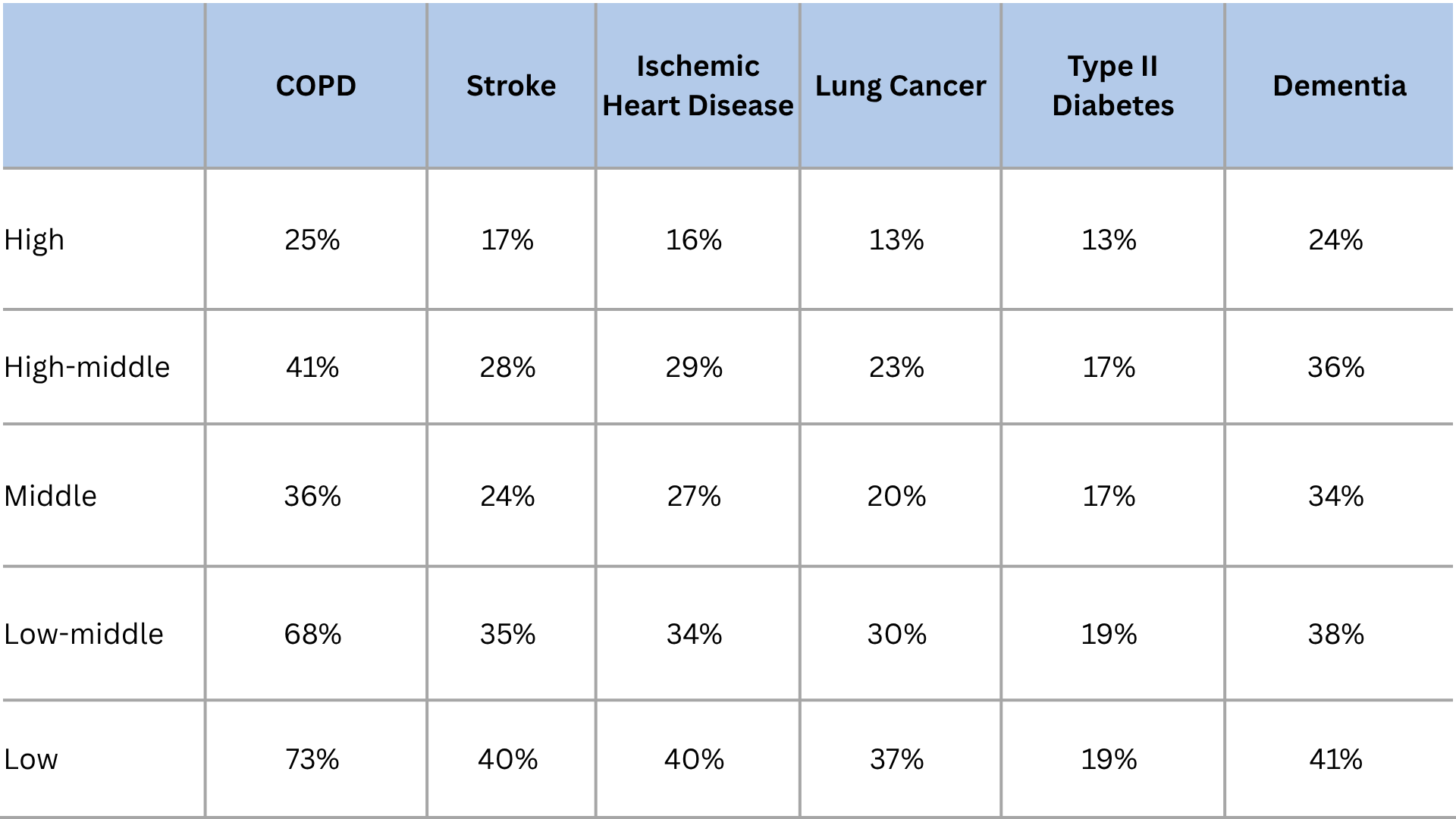
Figure 4: Percent of deaths caused by different noncommunicable diseases among SDI categories in 2023.
Eliminating the mismatch between burden and investment to encourage cleaner air.
The burden from air pollution is not borne equally. Similarly, the global response is not either. Low SDI countries face the highest health burden yet remain the most underfunded. Many of the most polluted countries received less than $1 per person, and East, West, Central and Southern Africa received less than 1% of global clean air funding in 2023. Global, national and local organizations are increasingly showing commitments to reducing air pollution’s impacts and undertaking targeted actions to address air pollution.
For example, the World Health Organization has updated its roadmap to demand an enhanced global response to the poor health effects from air pollution. The Latin America region has implemented its Regional Action Plan on Air Quality 2026-2029, highlighting emerging priorities and mandatory resources to improve air quality. Notably, India’s National Clean Air Programme has encouraged air quality advancements on a city, state, and national level. The Maldives have published a National Action Plan on Air Pollutants to commit advancing clean air in the country.
Understanding disparities across SDI are key steps in achieving clean air for all countries. Enhanced collection of air quality and health data and the use of up-to-date evidence from around the world can help make significant advancements toward meeting the WHO Sustainable Development Goals (SDG) targets, WHO Air Quality Guidelines, and other global objectives for advancing clean air action and achieving clean air for all.