Pollution data is essential in the implementation of key actions to reduce both the levels of emissions and their impact on human health and the environment. The body of scientific evidence available on a topic can often be used to understand a country’s capacity to identify, prioritize, and implement solutions to local development challenges. Air pollution presents significant health and developmental challenges, impacting economies through reduced labor productivity and premature mortality. In East Africa, air pollution is the second leading risk factor for deaths, accounting for 294,000 deaths in 2021 and causing more deaths than more well-known risk factors like unsafe water and sanitation.
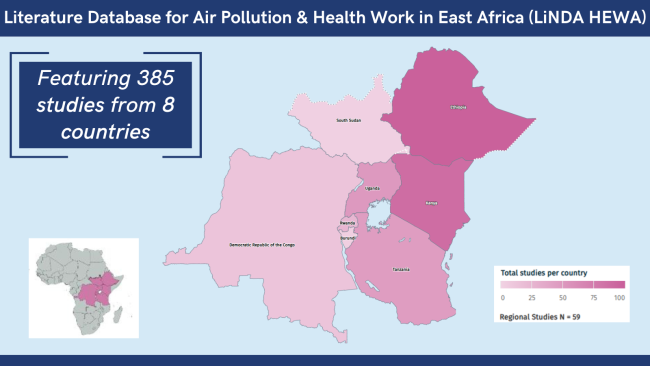
The Health Effects Institute (HEI) launched the Literature Database for Air Pollution and Health Work in East Africa (LiNDA HEWA) in January 2023 to provide an overview of the available air quality and health studies. The database focuses on eight countries in the region, namely Burundi, the Democratic Republic of the Congo, Ethiopia, Kenya, Rwanda, South Sudan, Tanzania, and Uganda. It was further updated in April 2025 following the launch of the East Africa scoping review report. The impetus for developing this database came from local feedback on the need to produce targeted summaries of available evidence in the region. Below, we highlight the types of studies found in this repository and explore its usability in informing the focus of current and future research projects and programs.
Growing evidence of the health effects of air pollution in East Africa
As of June 2025, the LiNDA HEWA database includes 386 peer reviewed publications, a majority of which have been conducted in Ethiopia, Kenya, Uganda and Tanzania. The figure below provides an overview of the study distribution across the eight countries. An additional 62 publications covering at least two East African countries are included as regional studies.
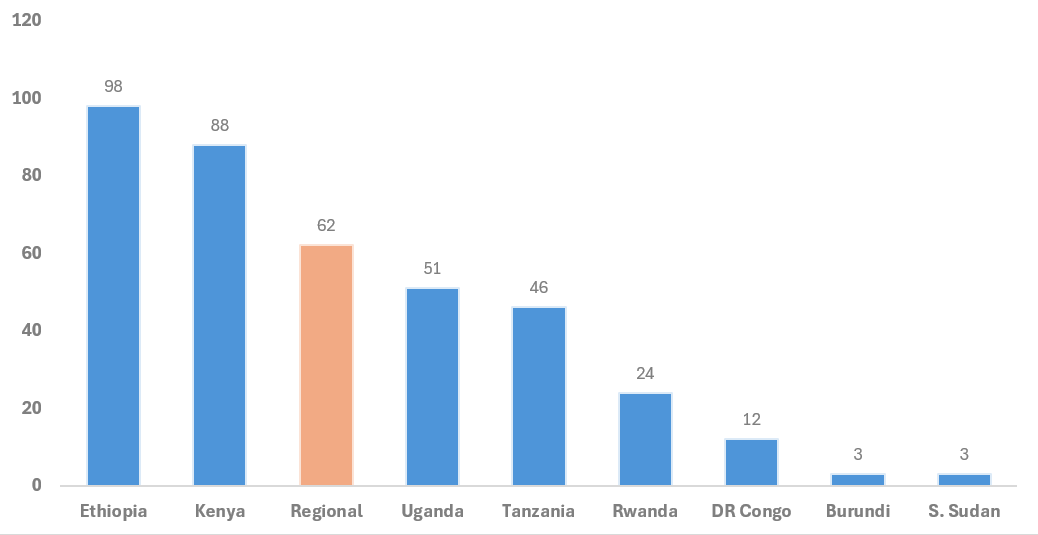
Figure 1: Number of studies by country
Figure 2 below shows the distribution of studies by study type. The database currently comprises of:
- 132 epidemiological studies
- 106 exposure assessment studies
- 86 air quality monitoring and modeling studies
- 31 review, editorial and commentary articles
- 20 health impact assessments
- 3 toxicological studies
More than 130 studies explore the association between air pollution exposure and health effects in the region, focusing primarily on respiratory health (112 studies), children’s health (68 studies), mortality and disability (29 studies), other health outcomes (23 studies), maternal and infant health (19 studies) and cardiovascular health (11 studies). This indicates an increasing focus on studies that deepen the understanding of the disease burden from air pollution.
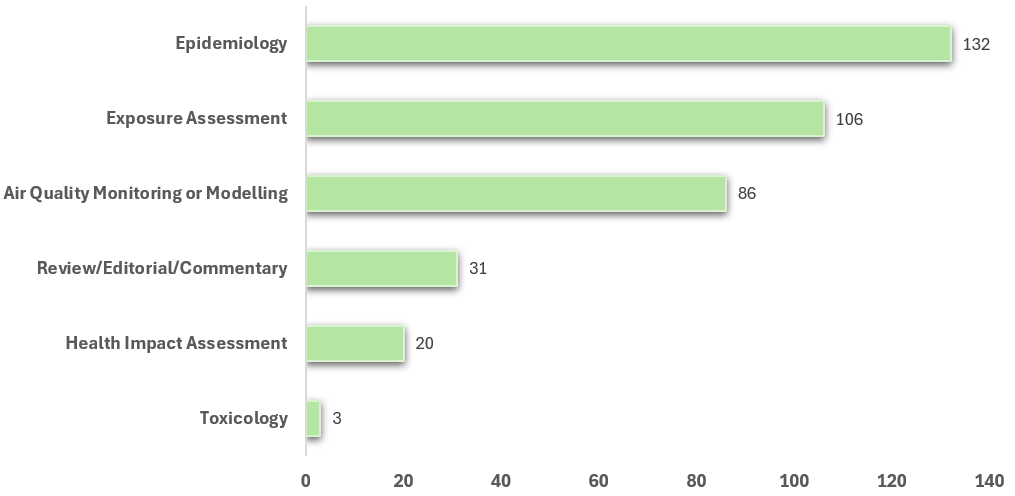
Figure 2 Number of studies grouped by study type
Despite the growing understanding of the health impacts of air pollution, countries in East Africa often face challenges in determining current and past levels of air pollution due to the lack of continuous monitoring networks. 50% of the studies in the database focus on exposure assessment, air quality monitoring, and modeling. Pollutants of concern in these studies include fine particulate matter (PM2.5 – 186 studies), indoor air pollution (78 studies), PM10 (55 studies), carbon monoxide (45 studies), nitrogen dioxide (27 studies), ozone (15 studies) and sulfur dioxide (11 studies). Recent calls from the broader community have emphasized the need to expand air quality data collection to include gaseous pollutants. Without robust pollution data as the foundation of air quality management programs in the region, enforcement and tracking of compliance to set limits remain largely ineffective.
How to use the database
The database is free and available to the public. Users can filter search results based on various criteria such as study type, health outcome, publication date and country. The database is displayed as a searchable map that users can interact with and download curated lists. It is designed to support researchers, practitioners, policymakers, and public health professionals in accessing targeted and high-quality evidence on air quality and its health effects. Available studies from across East Africa can be utilized for research, decision-making, strategic planning and community engagement.
Help us grow the database!
For further inquiries or to submit additional articles for inclusion in the database, please contact Mr. Victor Nthusi [vnthusi[at]healtheffects[dot]org]. We also welcome collaborative opportunities to disseminate and utilize this database for wider applications.