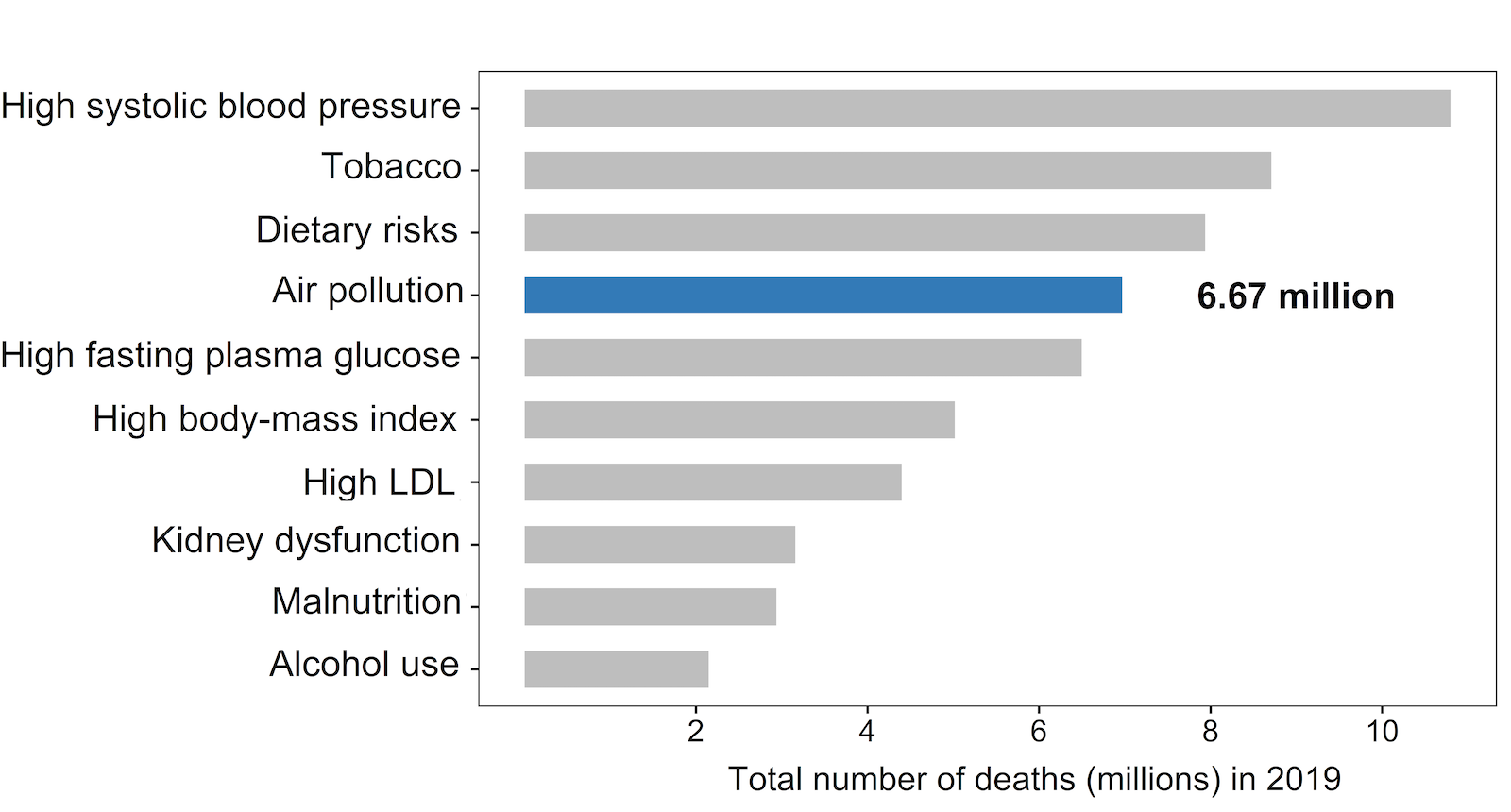
Figure N. Global ranking of risk factors by total deaths from all causes in 2019.
A Leading Cause of Death and Disability
Understanding air pollution’s health consequences is key to informing air quality interventions and saving lives. The GBD project’s comparative risk framework also provides critical perspective on air pollution’s importance as a public health problem relative to more well-known risk factors. In 2019, air pollution’s impact was exceeded only by high blood pressure, dietary risks, and tobacco use.
Health Impacts of PM2.5
Fine-particle outdoor air pollution is the largest driver of air pollution’s burden of disease worldwide. It contributed to more than 4 million deaths in 2019.
Health Impacts of Ozone
Ozone pollution accounted for nearly 365,000 deaths worldwide in 2019, representing a 16% increase since 2010.
Health Impacts of Household Air Pollution
Good news: The largest declines in air pollution’s burden of disease in the past decade have stemmed from reductions in household air pollution exposure.
Impacts on Newborns
Nearly 500,000 newborns died in 2019 as a result of air pollution exposure. Air pollution accounts for 20% of deaths from all causes in the first month of life; most are consequences of air pollution-related low birth weight and preterm birth.
Impact of Air Pollution on Life Expectancy
In 2019, air pollution shortened average life expectancy by 1 year and 8 months.
